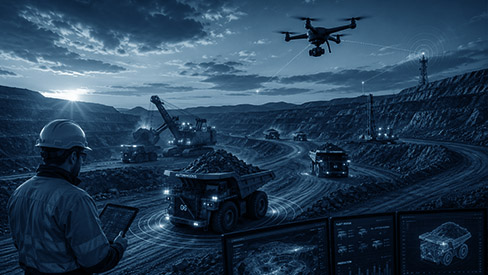
Wi-Fi for Mining & Autonomous Operations
The Wireless Foundation of Autonomous Mining
In today's mining industry, wireless connectivity is no longer just a communications platform it is the foundation of autonomous operations, workforce safety, operational efficiency, and digital transformation.
From open-pit mines and underground operations to processing facilities and remote control centers, mining organizations rely on highly reliable wireless networks to connect autonomous haul trucks, drilling systems, mobile equipment, industrial IoT sensors, operational technologies, and connected workers.
As mines become increasingly automated and data-driven, seamless wireless connectivity enables real-time decision-making, predictive maintenance, remote operations, and continuous visibility into critical assets and processes. Autonomous systems depend on low-latency, high-availability wireless communications to operate safely and efficiently in dynamic environments.
A poorly designed or outdated wireless network can result in production delays, safety risks, autonomous vehicle interruptions, operational blind spots, and costly downtime directly impacting productivity and profitability.
That's why Mining & Autonomous Operations Wi-Fi networks must be engineered for reliability, mobility, scalability, and resilience.
Why Wi-Fi Matters in Mining & Autonomous Operations
Mining operations are becoming increasingly connected, automated, and data-driven. From open-pit mines and underground operations to processing facilities and remote control centers, reliable wireless connectivity has become a critical enabler of productivity, safety, and autonomous operations.
Modern mining environments rely on real-time communications between people, vehicles, machinery, sensors, and operational systems. Autonomous haul trucks, drilling systems, remote-operated equipment, Industrial IoT sensors, video surveillance, and workforce communications all depend on highly reliable wireless infrastructure.
A properly designed wireless network enables mining organizations to improve operational efficiency, enhance worker safety, reduce downtime, and support the digital transformation initiatives driving the future of mining.
Without reliable connectivity, autonomous operations cannot achieve their full potential.
Technical Challenges in Mining & Autonomous Operations
Mining environments present some of the most demanding wireless networking challenges in the world.
Harsh Operating Conditions
Dust, vibration, moisture, extreme temperatures, and heavy machinery create challenging conditions for wireless infrastructure and connected devices.
Dynamic Environments
Mine layouts continuously change as operations expand, tunnels progress, and excavation activities evolve, impacting wireless coverage and performance.
Large Coverage Areas
Open-pit mines, processing plants, rail operations, and underground networks often require connectivity across vast and geographically challenging environments.
Autonomous Vehicle Connectivity
Autonomous haul trucks, loaders, drilling systems, and mobile equipment require uninterrupted connectivity with minimal latency and seamless roaming.
Underground Propagation Challenges
Tunnels, shafts, rock formations, and confined spaces create unique RF challenges that require specialized wireless design expertise.
Mission-Critical Reliability
Production interruptions can result in significant operational and financial impact. Wireless infrastructure must provide exceptional availability and resilience.
Industrial IoT Scalability
Mining operations increasingly depend on thousands of connected sensors, monitoring systems, cameras, and operational technologies.
Cybersecurity & Operational Technology (OT)
Mining organizations must protect critical operational systems while maintaining secure communications between autonomous equipment, personnel, and control systems.
Best Practices for Mining & Autonomous Operations Wi-Fi Networks
Design for Mobility and Roaming
Autonomous vehicles and mobile equipment require fast, predictable roaming performance. Wireless networks should be optimized to support uninterrupted mobility throughout the operational environment.
Design for Capacity, Not Just Coverage
Coverage alone is insufficient. Networks must support high-density IoT deployments, operational applications, video systems, and autonomous equipment communications.
Conduct Comprehensive RF Surveys
Accurate predictive designs and on-site validation surveys help ensure optimal performance in both surface and underground mining environments.
Prioritize Low Latency Communications
Autonomous and remote-operated systems often require real-time communications. Network design should minimize latency and packet loss to support operational requirements.
Build Redundancy into Critical Areas
Mission-critical operational zones should incorporate redundancy and resilience to maintain connectivity during maintenance activities or unexpected failures.
Secure Operational Technology Networks
Implement network segmentation, Zero Trust principles, secure authentication, and access control policies to protect operational systems and autonomous infrastructure.
Continuously Monitor Network Performance
Proactive monitoring, wireless health checks, and performance analytics help identify issues before they impact production or safety.
Prepare for the Future of Mining
Design infrastructure that supports future technologies including Wi-Fi 6E, Wi-Fi 7, Industrial IoT, AI-driven analytics, digital twins, autonomous operations, and connected worker initiatives.
Conclusion
The future of mining is autonomous, connected, and data-driven.
Reliable wireless connectivity serves as the foundation for autonomous vehicles, remote operations, Industrial IoT, workforce safety systems, and digital transformation initiatives across modern mining operations.
Organizations that invest in properly engineered wireless infrastructure gain improved productivity, enhanced operational visibility, increased safety, reduced downtime, and stronger support for autonomous mining initiatives.